
Shaelese King Is Building the Bridge Detroit's Talent Gap Demands
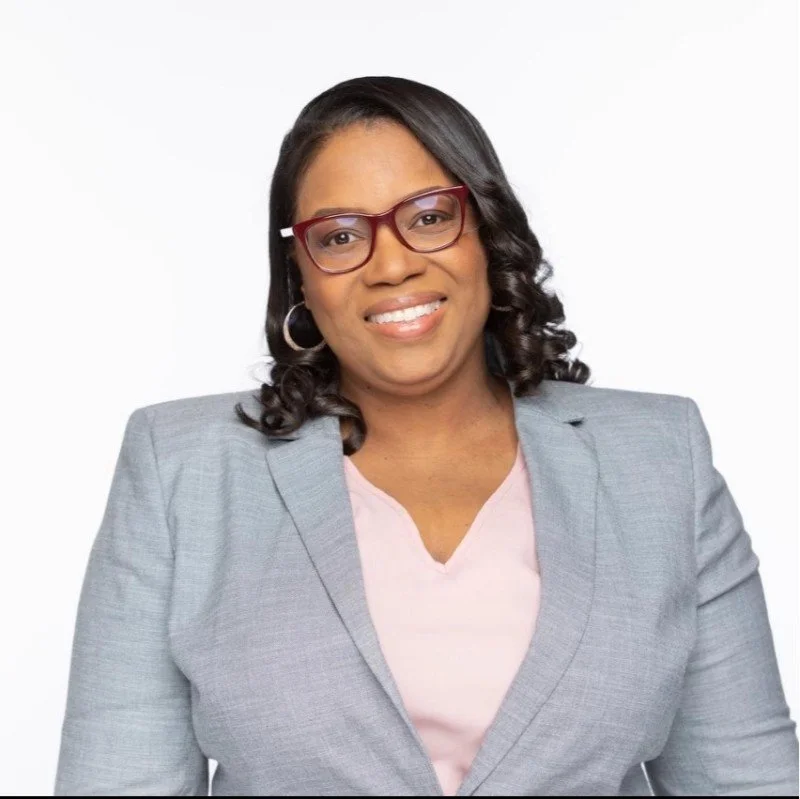
“Shaelese King founded Career Pathway Alliance in Detroit to connect students, employers, and communities — because no one else was bringing all the pieces together.”
On a Thursday afternoon at Seasons 52, a lunch conversation about volunteer hours turned into something much larger — a reckoning with a broken system, and a decision to fix it.
It was 2026. Shaelese King sat across from a community partner at Seasons 52 in Metro Detroit, the kind of lunch that starts with pleasantries and lands somewhere unexpected. Her partner began describing what her organization's employer partners were dealing with: they couldn't find the talent they needed. But as King listened, she kept pulling the thread backward — and forward. Before the hiring problem, there were students without mentors. Before the mentors, there were unclear pathways. Around all of it, there were nonprofits, schools, and workforce organizations all working separately, none of them in the same room. "No one was bringing all of those pieces together," she would later say. By the time the check arrived, King had made a decision. She wasn't going to found another recruiting company. She was going to build a bridge.
That bridge is Career Pathway Alliance, and Shaelese King is its founder.
She describes herself in terms of motion: she is becoming a workforce development leader who connects education, employers, and communities to create opportunities that help people discover their potential and build meaningful careers. Not someone who arrived. Someone in the act of building — and the distinction matters, because what she's building has never existed in quite this form in Detroit. Career Pathway Alliance isn't a staffing firm. It isn't a nonprofit career center. It is, by design, the connective tissue that those institutions were missing — a structure that sits between the student who has potential and the employer who needs it, and makes sure the two can find each other.
Here is the structural problem King walked into, stated plainly.
Metro Detroit is home to nearly 99,000 technology professionals and ranks as the No. 2 market in the United States for engineering talent, with more than 77,000 engineers concentrated in the region, according to the Detroit Regional Partnership's 2026 data. The demand for skilled workers is not abstract — it is measurable and it is growing. At the same time, the region's 34 colleges and universities graduate approximately 70,000 students per year, a pipeline that, on paper, should be feeding that demand directly. The Detroit Regional Partnership's 2026 figures name both numbers in the same breath, and the gap between them is precisely the problem: tens of thousands of students graduating into a region hungry for talent, with too little infrastructure to connect one to the other.
That infrastructure gap isn't unique to Detroit. Nationally, the misalignment between education and employment represents one of the most persistent economic inefficiencies of our time — costing individuals careers, costing employers productivity, and costing regional economies the mobility gains they need to compete. When talent goes unmatched, the loss isn't just personal. It is structural. And in a region where the transition away from legacy industry is still very much underway, the stakes of getting this right are unusually high.
The friction King encountered was not a locked door. It was something harder to name: the absence of a map.
Every institution she approached — employers, schools, nonprofits, workforce organizations — cared about the same outcomes. They wanted people to succeed. But they were operating independently, each solving one piece of a problem that required all the pieces to move together. Building something that asked them to coordinate meant earning trust that hadn't been established yet, demonstrating value through a model that had no existing blueprint, and doing it without the credibility that only time and outcomes can provide. The barrier wasn't hostility. It was inertia, and the quiet difficulty of asking people to change how they work when what they're already doing feels sufficient.
King's answer to inertia was motion — immediate, methodical, and grounded in listening before building.
Within the first week after that lunch at Seasons 52, she began validating the idea rather than assuming she already had the answer. She attended workforce development events across the region. She sat with educators and nonprofit leaders and asked them to describe what they were seeing. She mapped the talent ecosystem — where the students were, where the employers were, where the gaps lived — using Microsoft Copilot and Canva, and she built a website to begin articulating what Career Pathway Alliance would offer and to whom. She used LinkedIn not just as a platform for visibility but as an active mentorship channel, connecting directly with students who were trying to figure out what came next.
The hinge, in her telling, was the Seasons 52 conversation — the moment the scope of the problem became undeniable. But the choice was made again, every day after, in the details: validating instead of assuming, listening before declaring, building a framework before claiming outcomes.
Career Pathway Alliance was formally established as an LLC in April 2026 — roughly two months after King first identified the need in February of that year. The pace of that early movement is worth noting, because it reflects a deliberate methodology rather than urgency for its own sake.
To date, King has conducted outreach and discovery meetings with nonprofit leaders, employers, workforce organizations, students, and education partners across Southeast Michigan (self-reported). She has developed the organization's full service framework, branding, one-page organizational overview, website content, and consulting structure (self-reported). She is currently in the customer discovery and partnership development phase, working with 10 youth through NextGen partners (self-reported). Her network through Black Tech Saturdays and Detroit workforce development organizations has served as both a feedback channel and a source of early partnership opportunities (self-reported).
These are early-stage metrics, and they are presented as such. Career Pathway Alliance is not yet a scaled institution. It is a validated model in active development — which is precisely what this moment in its growth requires.
What changes if this works — not just for Shaelese King, but for the next person who comes after her?
The answer is straightforward, and it is the whole point. The next student, job seeker, or early-career professional who enters the Metro Detroit talent market won't have to navigate it alone. They will have access to mentors. They will have a clearer line of sight to employers who need what they're building toward. They will move from education to employment through a system that was designed to support that transition — not through trial and error, not by hoping someone happens to notice them.
That outcome scales. When the first generation of Career Pathway Alliance participants moves into careers, they become the mentors and connectors for the next cohort. The infrastructure compounds. Detroit has been here before — watching institutions built by its people generate returns that extend far beyond the individuals who built them. Career Pathway Alliance is being built in that tradition: not as a service to the talent gap, but as a permanent structural response to it. The city's economic future depends on keeping the talent it produces. Retention starts with connection. Connection starts with bridges. And bridges have to be built by someone.
If you believe the talent Metro Detroit produces deserves a system that actually works for them — not just for the employers looking to hire them — then Shaelese King's ask is straightforward.
Be the connection you wish someone had been for you. Reach out. Mentor someone. Create an opening for a person who is ready to grow and only needs the door to be cracked. If you are rooting for Detroit's workforce future to be built by Detroiters, then support the people building the infrastructure that makes that possible. Follow Career Pathway Alliance. Make the introduction. Show up.
The bridge doesn't build itself.
Learn more at careerpathwayalliance.com or connect with Shaelese King on LinkedIn at linkedin.com/in/shaelese-king
