
Lem Cartman Is Building Collaboration Into Infrastructure
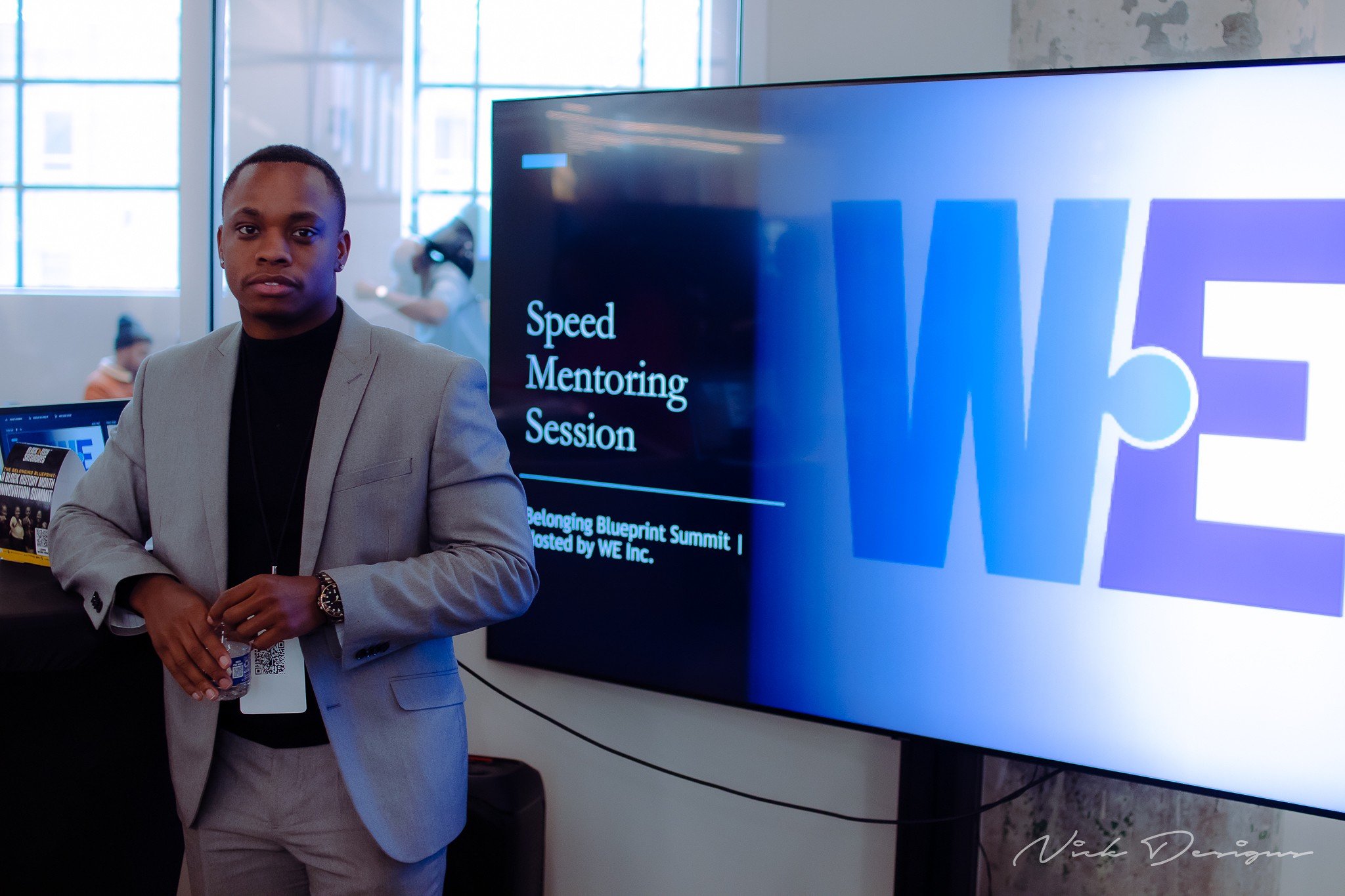
“Detroit founder Lem Cartman launched WE to turn cross-sector collaboration into a replicable strategy — because siloed systems are costing neighborhoods real outcomes.”
On Chicago's South Side in 2023, inside a community trauma initiative, Lem Cartman watched something that should have been a blueprint become a cautionary tale. The organizations in that room were working toward the same goal — reducing community trauma, protecting young people, stabilizing neighborhoods — but they were not working together. Different funders. Different timelines. Different theories of change. Same zip code. Same problem.
He watched passionate, competent people duplicate effort and compete for the same limited resources while the community they were trying to serve waited for outcomes that coordination alone could have accelerated.
That day, he stopped asking how to build another program. He started asking how to build the infrastructure for collaboration itself.
Lem Cartman is the Founder and CEO of WE, based in Detroit, Michigan. His professional biography spans healthcare, government, education, and community organizations — not because he couldn't pick a lane, but because the problem he is building toward lives at the intersection of all of them.
He describes his work plainly: building the infrastructure that helps communities, organizations, and leaders solve complex problems together instead of apart. That sentence is not a tagline. It is a structural diagnosis. The challenge facing Detroit — and South Side Chicago, and Philadelphia, and every city trying to convert civic energy into lasting outcomes — is not a shortage of passion. It is a shortage of connective tissue.
WE is that connective tissue.
Detroit carries a particular tension that makes Cartman's work both urgent and instructive. In 2022, Startup Genome ranked Detroit the number one Emerging Startup Ecosystem in the world — a designation that reflected the city's density of innovation energy, its cost of doing business, and its rising founder class. And yet, according to the U.S. Census Bureau, nearly 24% of Detroit residents still live below the federal poverty line. Those two facts exist simultaneously. The ecosystem is ascending. The neighborhood is still waiting.
That gap is not a contradiction — it is a coordination failure. And it is not unique to Detroit. Across the country, the Bridgespan Group has documented that nonprofit organizations working in the same communities routinely duplicate services and compete for the same philanthropic dollars rather than building shared infrastructure. The result, their research found, is not just inefficiency — it is reduced impact per dollar, and slower progress for the people those organizations are trying to serve.
The opportunity is not more programs. The opportunity is the connection between the ones already running.
The system Cartman is trying to fix is also the system that initially refused to fund or credential him.
He was not a technologist. He was not a career consultant. He did not walk in with investors, a generational network, or a single-sector specialty that gave institutional gatekeepers a familiar box to check. He was a young Black leader who moved between healthcare, government, education, and community organizations — and he was regularly told to pick one.
The barrier was not capability. It was the credibility that established systems reserve for people who specialize, not synthesize. And it was compounded by the nature of his idea: before anyone could believe in WE, they had to first be convinced that collaboration itself could be a fundable, scalable strategy — not just a civic virtue or a retreat-day platitude.
That is a harder sell than most founders face.
The Chicago room was the hinge.
Watching those organizations work in parallel — each doing real work, each falling short of what they could have done together — Cartman made a choice that required abandoning a more comfortable question. The comfortable question was: what program should I build? Programs are legible. Programs have deliverables, timelines, grant categories.
The harder question — how do we build the infrastructure for working together? — had no existing category, no obvious funder, no model to replicate. He asked it anyway.
That is where WE begins.
Cartman built WE the way most founders building something genuinely new have to build it: through relationships first, tools second, and proof of concept wherever he could find room to test.
He started with community listening in Chicago during the trauma initiative. Then he began testing the idea through partnerships — piloting WE's collaboration framework with Henry Ford Health, National League of Cities, and Black Tech Saturdays. His tools were lean: ChatGPT to sharpen thinking, Canva to make it legible, and the kind of constant community feedback that only comes from showing up to rooms before you have anything polished to show.
What he learned the hard way — and what he now says plainly — is that people don't buy ideas. They buy trust. The relationships you build before you need them, he has said, matter more than the solution itself. For a founder whose entire model rests on convincing sectors to trust each other, that is not just a personal lesson. It is a product truth.
Dismissing cross-sector collaboration as soft strategy — as relationship work that doesn't produce measurable returns — is a position the data no longer supports. What Cartman is building has an emerging track record, and it started moving fast.
WE was incorporated as a Delaware C-Corp on August 27, 2025. Within its first year of operation, the company logged a Detroit Economic Club speaking engagement (September 2025), a philanthropy consulting engagement with the Community Investment Network in Philadelphia (October 2025), a Media Partnership for Social Wealth Fest (April 2026), and a cross-sector collaboration session at the Congressional Black Caucus (May 2026). An IBM speaking engagement followed in June 2026.
In April 2026, WE received $2,000 in National League of Cities Capstone funding for the Youth Leadership Collaborative (self-reported). WE was named a Black Ambition Semifinalist and an Able Challenge Finalist in 2025 (self-reported). These are competitive national platforms. Getting to the finalist stage in year one is a signal — not a ceiling.
The stakes of what Cartman is building extend well beyond any single partnership or speaking engagement.
If collaboration can be proven as a strategy — not a value, not a workshop theme, but a replicable infrastructure with documented outcomes and a funding model — then the next community leader does not have to choose between serving people and building sustainable partnerships. They inherit proof. They inherit a playbook. They operate in a world where funders recognize coordination as a category worth investing in, and where cross-sector leaders are not asked to pick a lane but are instead recruited precisely because they can hold more than one.
That changes the pipeline. It changes what young Black leaders in Detroit and Philadelphia and Chicago believe is possible when they look at what kinds of careers and companies get built and funded and taken seriously. Economic mobility in cities like Detroit is not unlocked by more programs operating in parallel. It is unlocked by the infrastructure that allows those programs to multiply each other's impact.
That is the bet Lem Cartman is making. And the ledger is already open.
Detroit's ecosystem is ranked first in the world for a reason — and that reason is the density of builders already here, already working. What we lack is not innovation. What we lack is coordination infrastructure that lets those builders find each other, trust each other, and compound each other's work.
If you believe that is worth building, here is what you can do right now: refer WE to one organization that is ready to build stronger partnerships, and send Lem their name today. One introduction. That is how this infrastructure grows — one trust-based connection at a time.
→ [risewithwe.com](https://www.risewithwe.com/) | [@weincglobal](https://www.instagram.com/weincglobal)
