
Renee King Is Making Start Capital a Birthright
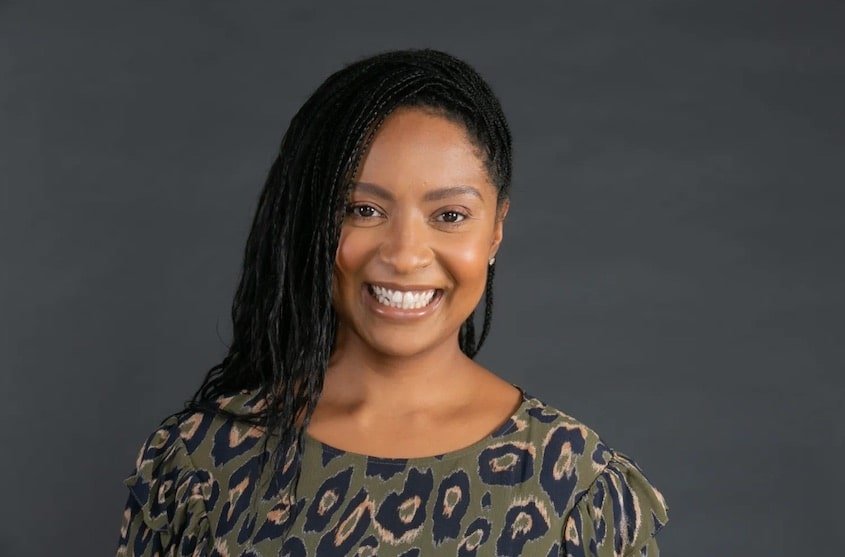
“Renee King built the friends-and-family round Black founders were never born into. Here’s how one architect is turning community into infrastructure.”
At a Black women founders conference in New York City, an investor stood up and addressed a room full of people who had already done something extraordinary — who had survived the capital deserts, the cold rooms, the networks that never sent them an invitation — and told them the problem was that they didn't have friends-and-family rounds.
Not the wealth gap. Not the inheritance system. Them.
Renee King was in that room. She didn't have one either.
She decided, that day, that she would stop waiting to be born into one — and start building the thing itself.
Renee King calls herself a Collaboration Architect. She is the founder of We Are The Funder$ and FundBlackFounders, and she serves as Programming Lead of the Boston Creator Accelerator and the Jrue & Lauren Holiday Social Impact Fund. She came up in Jamaica, Queens — New York City to the bone.
But the title that matters most right now is the one she's building toward: architect of the friends-and-family round our communities were never born into. She is not trying to get a seat at a table. She is building the village — capital, institutions, and everyday consumers organized to fund what they believe in, together — and she is doing it block by block, bill by bill, cohort by cohort.
To understand what Renee King is building, you have to understand what is missing — and why it has always been missing.
Black founders receive less than 1% of U.S. venture capital. That figure has held stubbornly for years, documented across multiple annual reports from Crunchbase and PitchBook, and confirmed in federal data cited by the U.S. Senate Committee on Small Business and Entrepreneurship. But venture capital is not even the first door. The first door is the friends-and-family round — the quiet, informal capital that lets an idea survive long enough to become a pitch deck, a prototype, a company. That round is not written about in business school curricula because it is assumed. It is assumed because it is inherited.
The Federal Reserve's 2023 Survey of Consumer Finances put median white family wealth at approximately $285,000. Median Black family wealth sits at roughly $44,900 — a gap that is not a feeling, but a structural consequence of redlining, discriminatory lending, and compounding exclusion over generations. That chasm is why the friends-and-family round is a birthright for some and an impossibility for others. It is why, as the Fed's Small Business Credit Survey has documented year after year, Black-owned businesses are denied loans at nearly twice the rate of white-owned businesses. The barrier is not ambition. The barrier is architecture.
And the stakes are widening. Since 2020, independent work has surged — Upwork's 2023 Freelance Forward report estimated that 64 million Americans freelanced that year, up from 57 million in 2019. Analysts at MBO Partners and others project that independent workers will constitute a majority of the U.S. workforce within this decade. The coming economy is not an economy of employees. It is an economy of founders — people who did not choose entrepreneurship so much as have it handed to them by a labor market that stopped offering the alternative. Which means start capital can no longer be a privilege distributed by proximity to wealth. It has to become infrastructure. It has to be built.
That is Renee King's assignment.
The friction she faced was not one thing — it was an entire invisible architecture, missing all at once.
No inherited wealth meant no friends-and-family round: no first capital to survive the most fragile stage, before the pitch decks and the term sheets even become possible. No warm introductions, because the networks that open doors are themselves inherited, passed like property through alumni networks and country clubs and dinner tables she was never invited to. And bias: walking into rooms where she was read as unready before she said a word, where the assumptions arrived before she did.
Capital. Network. Perception. The whole first layer, absent.
The conference moment was not a breakdown. It was a diagnosis.
When that investor stood in front of a room full of Black women founders and named the friends-and-family round as if it were a personal failing, Renee King did not absorb the shame. She absorbed the problem. She saw, clearly, that the system was treating a structural gap as an individual character flaw — and that the only answer was to build the structural thing the system refused to provide. She didn't leave that room looking for a round. She left it deciding to become one.
In February 2020 — weeks before the world locked down — Renee King launched the first version of FundBlackFounders on WordPress. A crowdfunding platform. A lever that could turn everyday people into the friends-and-family round for founders who didn't have one. Developers who believed in the vision joined early, before there was infrastructure to believe in, which is the only honest definition of trust.
The architecture of the idea — whatever you raise, we match — is what brought Jrue and Lauren Holiday in as partners, turning FundBlackFounders into something larger: the Jrue & Lauren Holiday Social Impact Fund, a vehicle for stewarding matched capital into community. That partnership became the foundation for co-designing the SPARK Act, federal capital-access legislation, alongside co-design partners including MIT, Harvard, Suffolk University, and Jaylen Brown's Boston XChange. The Boston Creator Accelerator emerged from the same coalition.
She learned the hard way that the platform was never the product. "The village is," she says — and the village can steward any tool. She also learned that policy is the layer that scales everything else. She had only voted in big elections. She knew nothing about policy. But she stayed curious — Google's Black Founders Fund opened the door to that world — and she kept telling officials plainly what Black business owners were actually living. That testimony became the SPARK Act. "Every problem we have is rooted in policy," she says. "Don't wait to feel qualified. I never did."
The temptation, when someone like Renee King lists her credits, is to reduce them to a highlight reel. That would be a mistake — and a misread of what her model actually is. Her work is stewardship, not fundraising. She organizes other people's capital and social capital and routes it to founders who would never otherwise see it. The receipts are not hers alone; they belong to the village she built.
Since FundBlackFounders launched in February 2020, more than 250 founders have been funded across its crowdfunding campaigns, matched rounds, and institutional partnerships including the Jrue & Lauren Holiday Social Impact Fund, Metro United Way, and Chime (self-reported aggregate; follow-on growth untracked). The Boston Creator Accelerator's Cohort 1 selected 10 Greater Boston founders from thousands of applicants; each received up to $100,000 in growth capital within a program valued at approximately $250,000 per founder (self-reported). Cohort 2 opened April 2026. The SPARK Act, which King co-designed, is federal capital-access legislation moving through the policy pipeline.
"It can't be centered around one person, one platform, one thing," she told the Boston Globe. "It needs to be an entire village organized."
She is the architect. The village is the instrument.
What Renee King is building is not just a fund. It is not just a platform, or a program, or a policy campaign — though it is all of those things.
It is a rewrite of who gets to start.
When a founder — a young woman from a city like Detroit or Boston or Jamaica, Queens — walks into her first real year of building, what she will find waiting for her is different because of this work. A crowd that already believes in her idea. A lawyer who will look things over. A warm introduction into a room that used to require a bloodline to enter. People advocating behind closed doors. The friends-and-family round, available to her not because of who her family is, but because of what her community decided to build together.
That is not charity. That is infrastructure. And as independent work becomes the dominant mode of American economic life, that infrastructure is not a fairness issue — it is the operating system the next economy requires. An economy that lets start capital remain an accident of birth is an economy that forfeits the inventions, the solutions, the companies it will never get to see. We have been forfeiting them for generations.
The question is whether we are done.
Follow @wearethefunders on Instagram — that is where the village moves, where the organizing happens, where the next round is being built in real time. And if you are a funder, a brand, or an institution ready to steward capital into community — not grant it from a distance, but steward it alongside people who know the terrain — reach Renee King directly and make the introduction count.
If you are rooting for the next economy to belong to more of us, then fund the architect who is building its foundation.
