
Kierra Woodger Is Building the Infrastructure Communities Need to Stay Housed
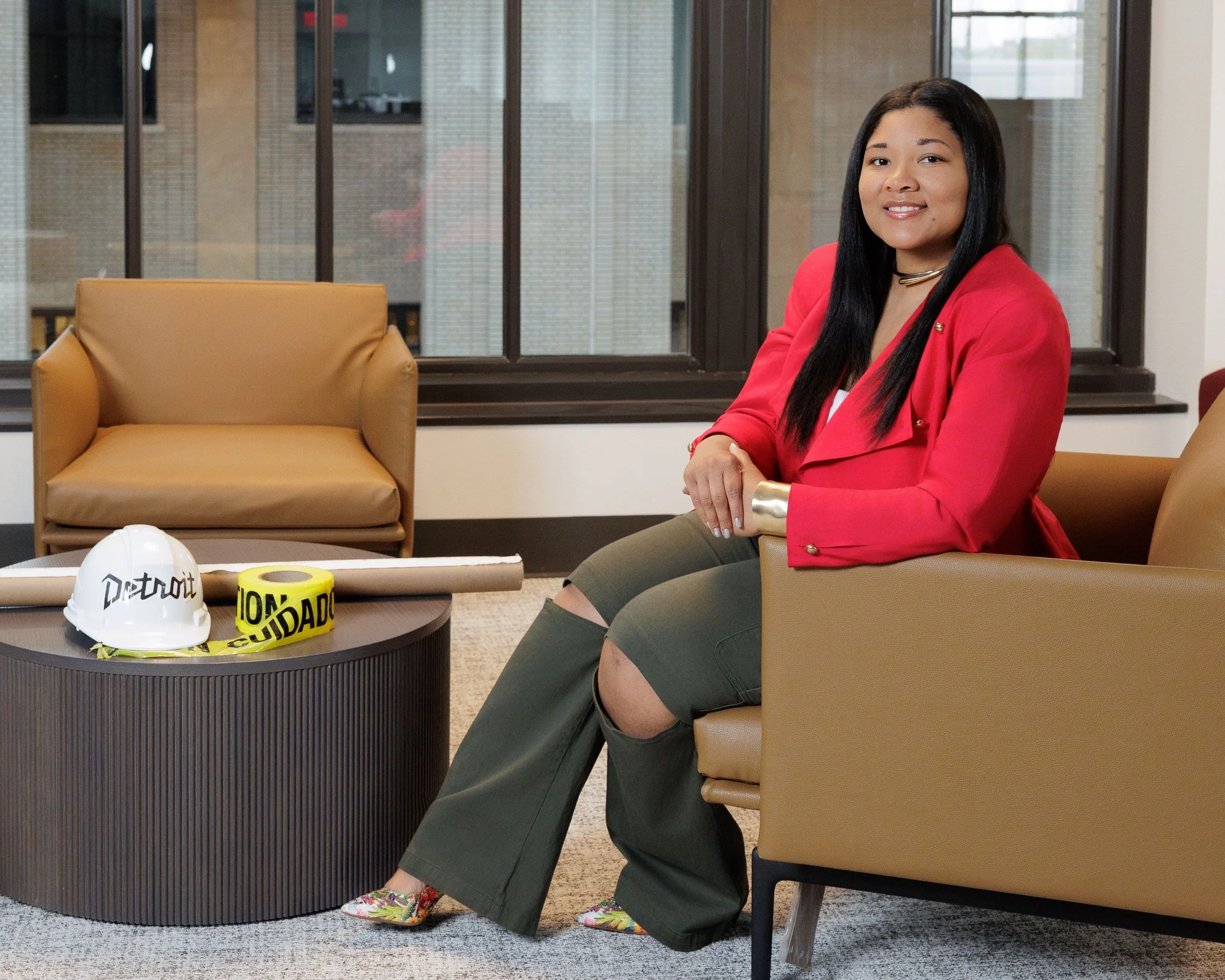
“Detroit founder Kierra Woodger is developing ThriveHabitat™, a housing operations platform helping providers coordinate people, properties, and services.”
In a home office in Detroit, in the spring of 2024, Kierra Woodger was finishing a Techstars application. The pitch deck for ThriveHabitat™ was open on her screen. She picked up the phone and walked her mother through it — the platform, the vision, what she believed was possible. Her mother told her to trust the vision God had placed on her heart. Woodger closed the application and started building.
That moment was not remarkable because it was dramatic. It was remarkable because it was ordinary — a daughter, a mother, a phone call, and a decision that would shape what comes next for housing technology in Detroit.
Kierra Woodger introduces herself plainly: Founder and CEO of KIE2LAVIDA PROPERTIES LLC, operating in Detroit since 2019. But the more precise description is the one she gives herself: she is becoming a leader in housing innovation by building the technology and infrastructure that helps communities stay housed. That is not a tagline. It is an accountability statement — a declaration of what she is in the middle of doing, and who she intends to be when it is done.
The problem Woodger is solving is not a shortage of compassion. It is a shortage of coordination. A Detroit family can lose housing not because help doesn't exist, but because the landlord, the nonprofit case manager, and the housing voucher administrator are all operating in separate systems that don't talk to each other. By the time the right information reaches the right person, the window has closed.
The scale of that failure is measurable. According to the Harvard Joint Center for Housing Studies, nearly half of all U.S. renters — approximately 22.4 million households as of 2022 — are cost-burdened, meaning they spend more than 30 percent of their income on housing. In Detroit, the pressure is compounding: the city's poverty rate consistently ranks among the highest of major U.S. cities, with the U.S. Census Bureau's American Community Survey placing it above 30 percent in recent years. Cost burden and poverty do not cause eviction alone. Disconnected systems accelerate it. ThriveHabitat™ is designed to interrupt that acceleration — a housing operations platform that helps housing providers coordinate people, properties, and services so more families can remain stably housed.
Woodger built her first operational foundation without a technical background. She knew the problem intimately — five years of operating housing and property management services in Detroit, partnerships with Covenant House Michigan and Detroit Phoenix Center supporting homeless youth and Housing Choice Voucher households — but the pathway from lived operational knowledge to scalable technology was not marked. Limited capital, no prior software development experience, and few visible examples of Black women building housing technology today: these were the conditions she was working within.
They are not unusual conditions. They are the standard conditions for founders who bring community knowledge into spaces where capital flows toward credentialed insiders.
The hinge came before the Techstars application, in the decision to begin learning rather than waiting until she felt ready. Woodger enrolled in the Apple Developer Foundation Program to build her foundational understanding of app development. She describes the lesson she learned the hard way in terms that are direct: you don't have to know how to build everything before you start. Clarity, confidence, and the right people come through taking the first step.
That is her experience speaking, not a formula. She did it before she had the full picture.
What followed was a deliberate accumulation of knowledge and community. Black Tech Saturdays connected her to the ecosystem. Donovan Brown's JOURNi x AI Workshop Series — Adult Tech: App Development — helped her develop technical literacy in a room built for people like her. W. Scott Richardson's NSBE Detroit Professionals AI workshop sharpened her understanding of the tools available. Goldman Sachs 10KSB added the business infrastructure layer. AI development tools accelerated early prototyping of ThriveHabitat™ itself.
None of these were shortcuts. They were on-ramps that the ecosystem had built — and that Woodger used with intention. The ThriveHabitat™ MVP is now in active development.
The receipts that matter here are not just Woodger's — they are evidence of what happens when someone with deep operational knowledge gets access to the right infrastructure. KIE2LAVIDA PROPERTIES LLC has been operating in Detroit since 2019 (self-reported). The company has supported housing stabilization for homeless youth, Housing Choice Voucher households, and Detroit residents through documented partnerships with Covenant House Michigan and Detroit Phoenix Center (self-reported). In 2025, Woodger completed the Operations School program. In 2026, she was named a Black Girl Ventures Fellow, completed Goldman Sachs 10KSB, won the AI Collective Detroit Hackathon, was accepted into the HBCU Founders Initiative Pre-Accelerator, and received support through the Motor City Contractor Fund and the Walker-Miller/DTE Energy Efficiency Academy (all self-reported, 2026 dates indicate anticipated or recently completed milestones — see Verification Flags). She is currently seeking $250,000 in pre-seed funding to complete the MVP and onboard ecosystem partners.
The capital gap she faces is real and documented. The Federal Reserve's 2021 Small Business Credit Survey found that Black-owned businesses were approved for full financing at roughly half the rate of white-owned businesses. A founder with five years of operational history, a growing credential stack, and an MVP in active development is still navigating a system that was not designed to see her coming.
What changes when Woodger wins is not just her outcome. The next founder with a big idea and no technical background will have proof that lived experience belongs in technology. The next housing innovator will know that social impact and scalable business are not competing priorities — they are the same priority, built together. The next Detroit family at risk of losing housing will benefit from systems that actually share information across the providers who are trying to help them.
That is the architecture of belonging — not just one person getting through the door, but the door getting wider because of what she built.
Detroit's housing crisis is not a problem that compassion alone can solve. It requires coordination infrastructure. Coordination infrastructure requires builders who understand the systems from the inside. Kierra Woodger is one of those builders. The question for this city — and for the investors, housing organizations, and technology partners watching — is whether we recognize that in time to be useful.
If you are rooting for Detroit's housing ecosystem to work better for the families it's supposed to serve, then join the ThriveHabitat™ waitlist or introduce Kierra Woodger to one housing organization, property owner, or community partner ready to become an early pilot. The link is in her hand. The infrastructure is being built. The next step is yours.
Learn more atk2lproperties.comor connect with Kierra on LinkedIn.
