
Meredith Love Is Building the Rooms Detroit Needs
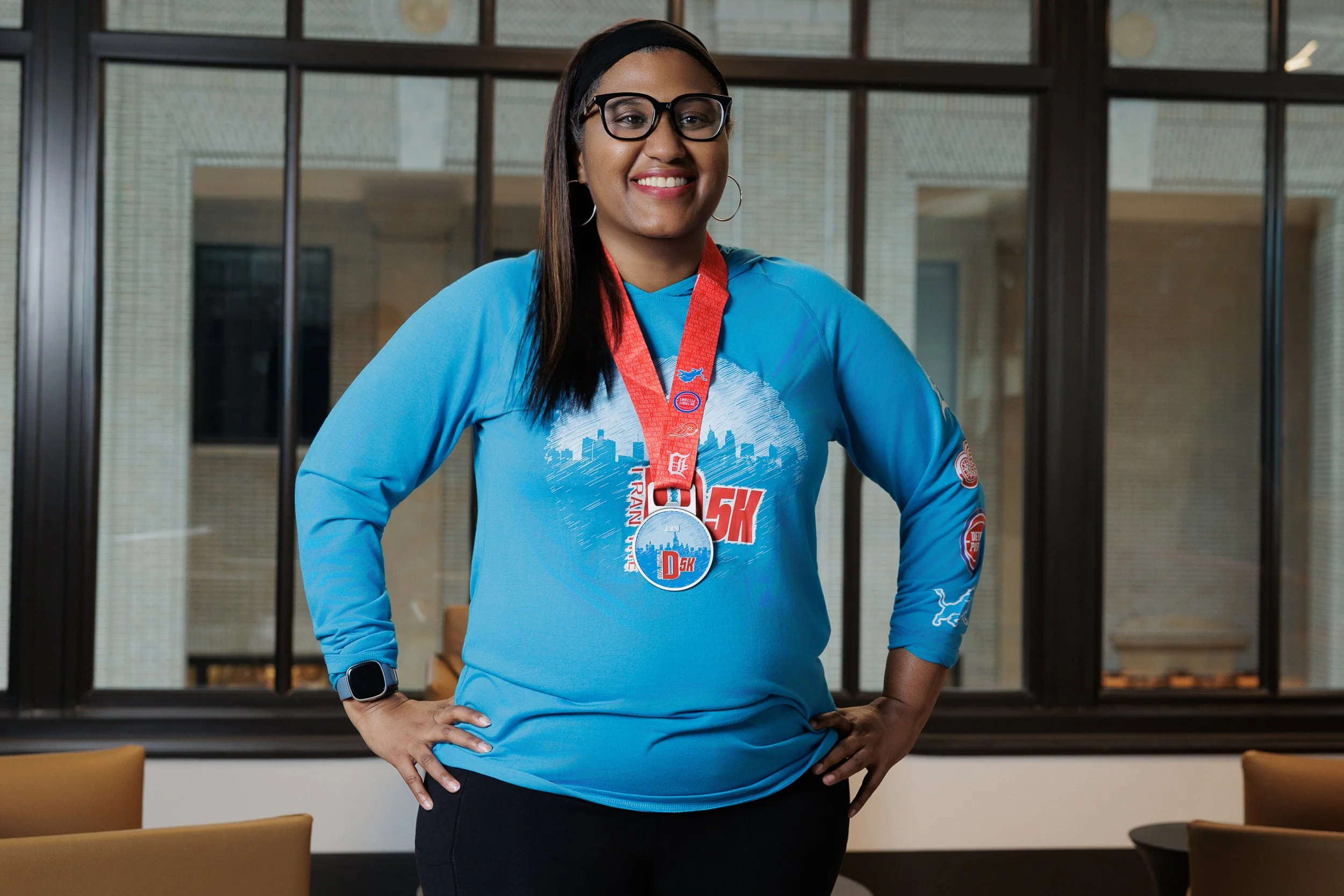
“Detroit Product Owner Meredith Love is connecting talent to opportunity through Black Tech Saturdays, BasBlue, and the NAACP — expanding who belongs in tech.”
At Newlab at Michigan Central on February 28, 2026, the tables are full. Founders are pitching ideas. Product managers are swapping frameworks. Engineers are asking questions they weren't sure they were allowed to ask out loud. At the BTS Belonging Blueprint event, Meredith Love sits inside a room where three things she has spent her career holding separately — technology, leadership, and community — are happening at once, in the same place, at the same time.
She arrived that Saturday thinking of herself primarily as a Product Owner. She left with a clearer name for what she was already doing.
Meredith Love is a Detroit-based Product Owner, Executive MBA graduate, and PMP-certified technology leader with more than 15 years of experience leading digital transformation initiatives across marketing, incentive platforms, and product strategy. At Maritz, she serves as Product Owner for General Motors programs, managing large-scale technology and incentive platforms that serve dealer and employee audiences across North America.
But the becoming she is most focused on right now is something she describes in her own terms: she is becoming a catalyst for connection and impact by building spaces where people can grow, belong, and succeed. Not as an exit from her professional career. As an expansion of it.
The problem she is working on is structural, and it is not new. Talented people — especially women and people of color — are not primarily held back by a lack of skill or ambition. They are held back by proximity to opportunity: access to the rooms where decisions get made, introductions that open doors, and spaces where they can see themselves in what is being built.
The data makes the stakes concrete. Black founders receive approximately 1% of venture capital funding in the United States, despite representing a growing share of new business formation, according to reporting by Crunchbase and research cited by the National Venture Capital Association. Women-led startups received just 2% of U.S. venture capital in 2023, according to PitchBook's annual gender report. These are not rounding errors. They are the cumulative result of who gets into rooms, who gets introduced, and who gets to pitch.
Detroit is building an intentional alternative to that pattern. The city's technology ecosystem has expanded significantly over the past decade, anchored by investments like the Michigan Central mobility campus and a growing concentration of startups, research institutions, and community-centered innovation organizations. But infrastructure without access is not equity. The question is who gets through the door — and who holds it open.
For most of her early career, Love navigated that question alone. She had a strong education and built a successful professional record, but many of the rooms where opportunities were created operated on an informal logic: you needed to already know someone to get in. She found mentors, built networks, and figured out corporate environments largely through her own effort and persistence.
What she saw when she began investing more deeply in community organizations confirmed what she had experienced personally. The friction was not primarily about capability. It was about isolation — talented people who lacked connections, lacked information, and had never been in a room where they could see clearly what was possible for them.
She did not wait for a formal invitation to change that. She started by showing up.
After the BTS Belonging Blueprint event in February 2026, Love returned to Newlab the following month for the BTS Women's Founder Takeover. During a session on "third spaces" — the places outside of home and work where people connect, learn, and build — something clarified. She found herself thinking about Josephine Harreld Love, who in 1969 co-founded Your Heritage House, a Detroit nonprofit that created exactly that kind of space for Black children, artists, and families. Love had long been inspired by her work and legacy. Sitting in that room at Newlab, more than fifty years after her grandmother built something from conviction, Love recognized that she was being called toward a similar kind of work.
She didn't announce it. She organized herself around it.
The skills she brought to that work were the same ones she had spent years developing professionally. Agile methodologies. Stakeholder alignment. Strategic planning. Data-driven decision-making. Jira. Rally. The architecture of product work — identifying a need, building toward it iteratively, measuring what matters — translated directly into the architecture of community leadership.
She became a founding member of the Detroit NAACP Health & Wellness Committee, helping grow its annual Mental Health Awareness Day from a small community program into a recurring event that now draws sponsors, partners, vendors, and media attention. She estimates that hundreds of community members are reached annually through that programming (self-reported, based on multi-year event participation; specific counts available through NAACP event records). In 2026, she was selected to serve on the Black Tech Saturdays Review Committee, helping evaluate applications and support the next generation of founders and leaders coming through the BTS pipeline. Through BasBlue, she found a community of women organized around leadership, learning, and long-term impact.
She previously served on the board of Wellspring, supporting youth education initiatives in the Detroit area.
The hardest lesson she carries from all of it is this: the most meaningful opportunities came not when she tried to fit into someone else's definition of belonging, but when she showed up as herself. "The right people and the right communities don't require you to become someone else," she says. "They give you room to become more of who you already are."
The numbers attached to Love's work are modest by the metrics venture capital uses to measure impact. No cap table. No Series A. No user growth curve. But our barriers to capital and belonging are not imaginary, and neither are the costs of not addressing them.
What is verifiable: Love has been a founding member of a health and wellness initiative that has grown year over year into a program with documented community partners and media presence (self-reported; event records available). She has served on the BTS Review Committee, contributing to a selection process that directly shapes who enters Detroit's founder and leadership pipeline (self-reported). She has 15-plus years of professional technology leadership and holds both a PMP certification and an Executive MBA (self-reported, verifiable through LinkedIn). And she previously served on the board of Wellspring (self-reported).
These are not small things. They are the connective tissue that holds an ecosystem together — the work that makes it possible for the next person to find the room faster than she did.
Here is what changes if more people like Meredith Love are visible: the definition of who belongs in Detroit's innovation ecosystem expands. The next Product Owner who has never thought of herself as a founder sees a path. The next community advocate who has never thought of himself as a technologist sees a door. The next person sitting in a third space, listening to a conversation about what is being built, goes home with a clearer sense of what they are becoming.
Detroit's economic future is not separable from this question. A technology ecosystem that systematically underinvests in the talent of Black professionals and women is not just leaving value on the table — it is replicating the same access gaps that have constrained mobility in this city for generations. Expanding who belongs is not a social program. It is a growth strategy.
Love is not waiting for someone else to execute it.
If you believe that Detroit's innovation ecosystem should reflect the full range of talent this city holds, here is what you can do right now: RSVP to a local community event and introduce yourself to one person you don't know. That is how rooms get built. That is how the next Meredith Love finds the room she was meant to be in.
