
Matthew Burnett Is Building the Infrastructure Detroit's Founders Deserve
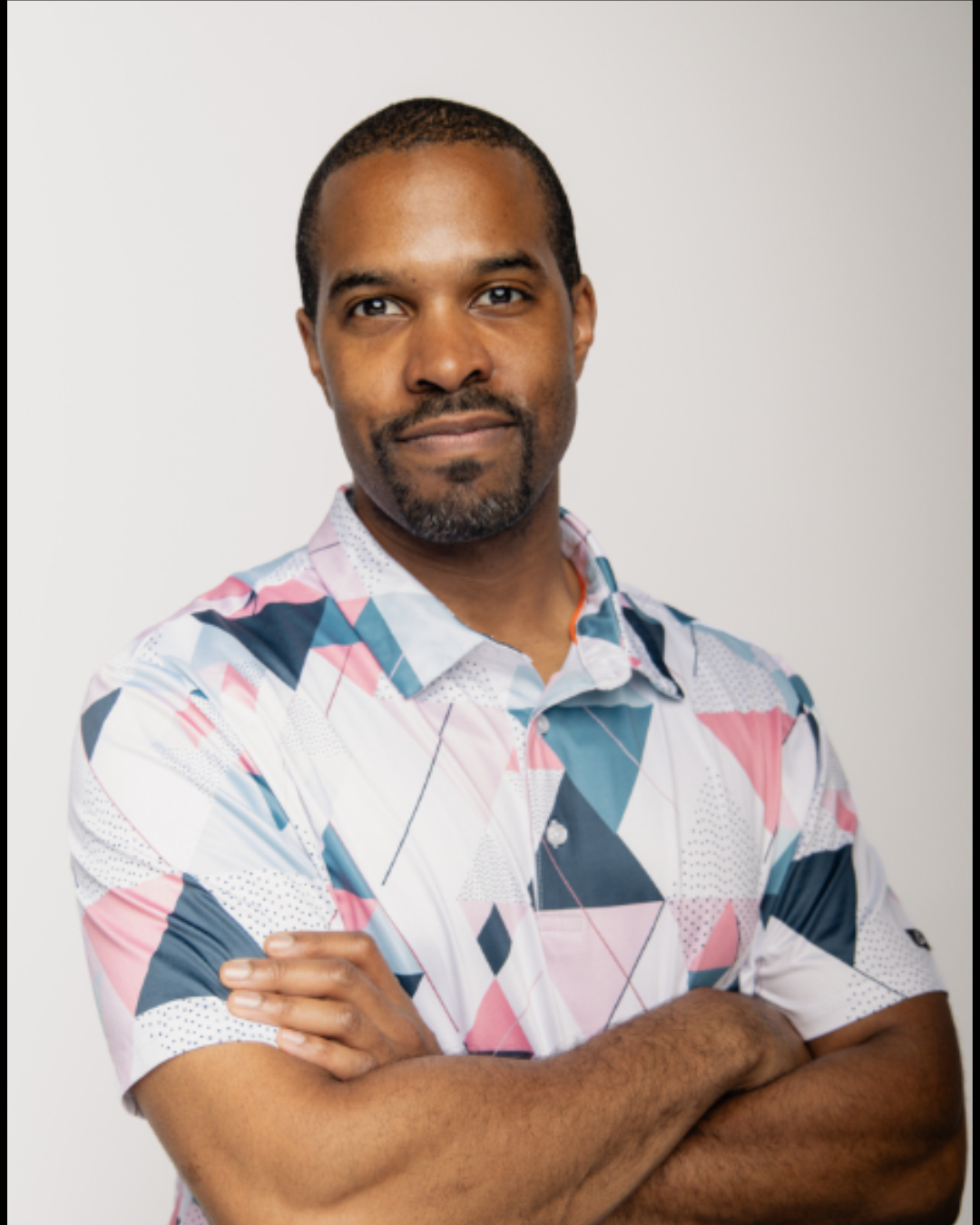
“Detroit founder Matthew Burnett spent months navigating a fragmented ecosystem before building RoundHere — a platform designed to make the Midwest’s entrepreneurial resources visible and accessible.”
On an afternoon at Newlab Detroit, a founder sat down and started asking a question the city couldn't yet answer.
Matthew Burnett had recently moved back to Detroit after more than a decade in New York. He had a company to grow. He knew the investors, the accelerators, the mentors existed somewhere in this city — he'd heard about the Detroit Startup Fund, seen what Michigan Founders Fund was doing, watched city leadership talk about the entrepreneurial moment Detroit was having. But knowing something exists and being able to reach it are two different things.
He'd been going to events. Searching online. Making cold introductions for months, trying to reconstruct by hand the kind of network that had just been ambient in New York. Then, through a connection to Black Tech Saturdays and Michigan Founders Fund, he found himself at Newlab — in a room where founders, investors, and operators were openly sharing resources and opportunities without a paywall or a secret handshake.
It felt, finally, familiar. And that familiarity raised a question he couldn't shake: Why was this so hard to find?
Matthew Burnett is becoming an architect — not of buildings, but of networks. The platform he is building, RoundHere, is designed to make the connective tissue of an entrepreneurial ecosystem visible, organized, and easy to navigate for the founders who need it most. He describes his work precisely: collapsing the distance between a builder and their breakthrough so that every founder can bring their magnum opus into the world.
That's not a tagline. It's the direct output of his own experience inside the gap.
The gap is structural, and the data makes that plain.
The Midwest generates roughly 16% of U.S. GDP — a share of economic output that dwarfs the assumptions coastal capital tends to make about the region — yet it receives only an estimated 3 to 5% of U.S. venture capital. Meanwhile, according to data from the National Venture Capital Association, nearly half of all U.S. startup investment remains concentrated in California alone.
That imbalance has a human cost that shows up before the funding stage. The Kauffman Foundation has documented for years that access to networks and mentorship — not ambition, not work ethic — is among the most significant predictors of whether a new founder succeeds or stalls. First-time founders in non-coastal markets aren't starting with a talent deficit. They're starting without a map.
Burnett is building the map.
The friction he ran into wasn't subtle. When he returned to Detroit, he had no established investor network waiting, no roadmap for navigating a fragmented ecosystem, and no efficient way to find the right people at the right stage of his build. In a well-resourced hub, those things accrue passively — through proximity, alumni networks, accelerator cohorts. In the Midwest, founders spend as much time building relationships as building companies. Geography and existing networks determine access to capital, mentors, and opportunities in ways that have nothing to do with the quality of the idea.
That is the antagonist in this story. Not a bad market. Not insufficient talent. A system that requires too many founders to either already know someone, or spend months becoming the person who knows someone.
The hinge came at Newlab. Sitting in that room — introduced through BTS, plugged in through Michigan Founders Fund — Burnett didn't just feel relief. He felt clarity. Detroit doesn't lack resources. It lacks infrastructure to connect founders to them. The problem was solvable. He was going to solve it.
RoundHere was born from that afternoon.
He didn't build it alone, and he didn't build it in a vacuum.
Burnett started by mapping how founder engagement actually works across Detroit's ecosystem — not how it's described in pitch decks or press releases, but how it actually happens: at events, through mentorship referrals, across programs that don't always talk to each other. He worked closely with ecosystem partners from the start — Bamboo, Newlab, Michigan Founders Fund, Generator, and TechTown Detroit — to understand the terrain before building on top of it.
Medalla Matherin, Rishi from Michigan Founders Fund, and friends at Newlab helped him understand the problem at depth. BTS gave him a proving ground where the community's honesty could sharpen the model.
From that partnership-first foundation, RoundHere built a system to capture founder activity in one place: event participation, engagement analytics, consultation tracking — the kind of infrastructure that lets ecosystems see themselves clearly and lets founders find what they need without months of manual navigation.
His hardest lesson came from looking too narrowly, too long. He'd been building with Detroit as his sole reference point — testing the hypothesis against one city's data. In retrospect, he says he would have piloted across multiple cities and partner types from the beginning. The problem looks different depending on where you're standing. One city gives you a data point. Multiple cities give you the truth. That focus cost time in the R&D stage that he can't recover, and it's now shaping how he scales.
The receipts are early and they are real.
Context first: the barriers Burnett is navigating — fragmented ecosystems, limited local capital, the relational debt that first-generation founders carry — are not abstractions. They are the reason platforms like RoundHere have to be built at all, and why it matters that one is being built from Detroit by someone who experienced the gap firsthand.
What he has built to date (self-reported): five active ecosystem partnerships with Bamboo, Newlab, Michigan Founders Fund, Generator, and TechTown Detroit; a Detroit Startup Grant award; recognition from Black Tech Saturdays; a Midwest House livestream partnership from December 2025; and a Michigan Tech Week livestream partnership confirmed for May 2026.
These are foundation stones, not the full building. What they demonstrate is that Detroit's ecosystem is already voting with its participation.
If RoundHere wins, the next founder gets a shorter path.
They won't have to leave their city to find the people, capital, and momentum they need. They won't spend their first year building the rolodex that should have been available on day one. The city itself becomes more connected, more visible, and more investable — not just to founders working within it, but to the capital looking for signals of ecosystem maturity from the outside.
This is what infrastructure does. It doesn't just help the person who builds it. It lowers the floor for everyone who comes next.
Detroit is in a moment. The investment is real — from local initiatives to city leadership to a growing national recognition that the next great companies don't have to be built in San Francisco. But moments become movements only when the connective tissue is in place. When a first-time founder in Detroit or Cleveland or Indianapolis can find the right mentor, the right investor, the right room — not after six months of manual searching, but quickly, because the infrastructure makes it possible — that is when the Midwest stops being a footnote in startup culture and starts being a chapter.
Burnett is building that infrastructure. In Detroit. Now.
If you are rooting for Detroit's entrepreneurial ecosystem to become what its talent deserves, then share RoundHere with one person who shapes how founders connect — a coworking space operator, an accelerator program manager, a conference leader, or an investor who knows the gap is real.
The platform is at roundhere.io . The work is already underway. What it needs now is the network effect that only happens when the right people decide to move.
Matthew Burnett is the CEO of RoundHere and a member of the Black Tech Saturdays community. Follow him at linkedin.com/in/matthewwithroundhere
