
Geralyn Gaines Is Building the Blueprint Detroit's Leaders Deserve
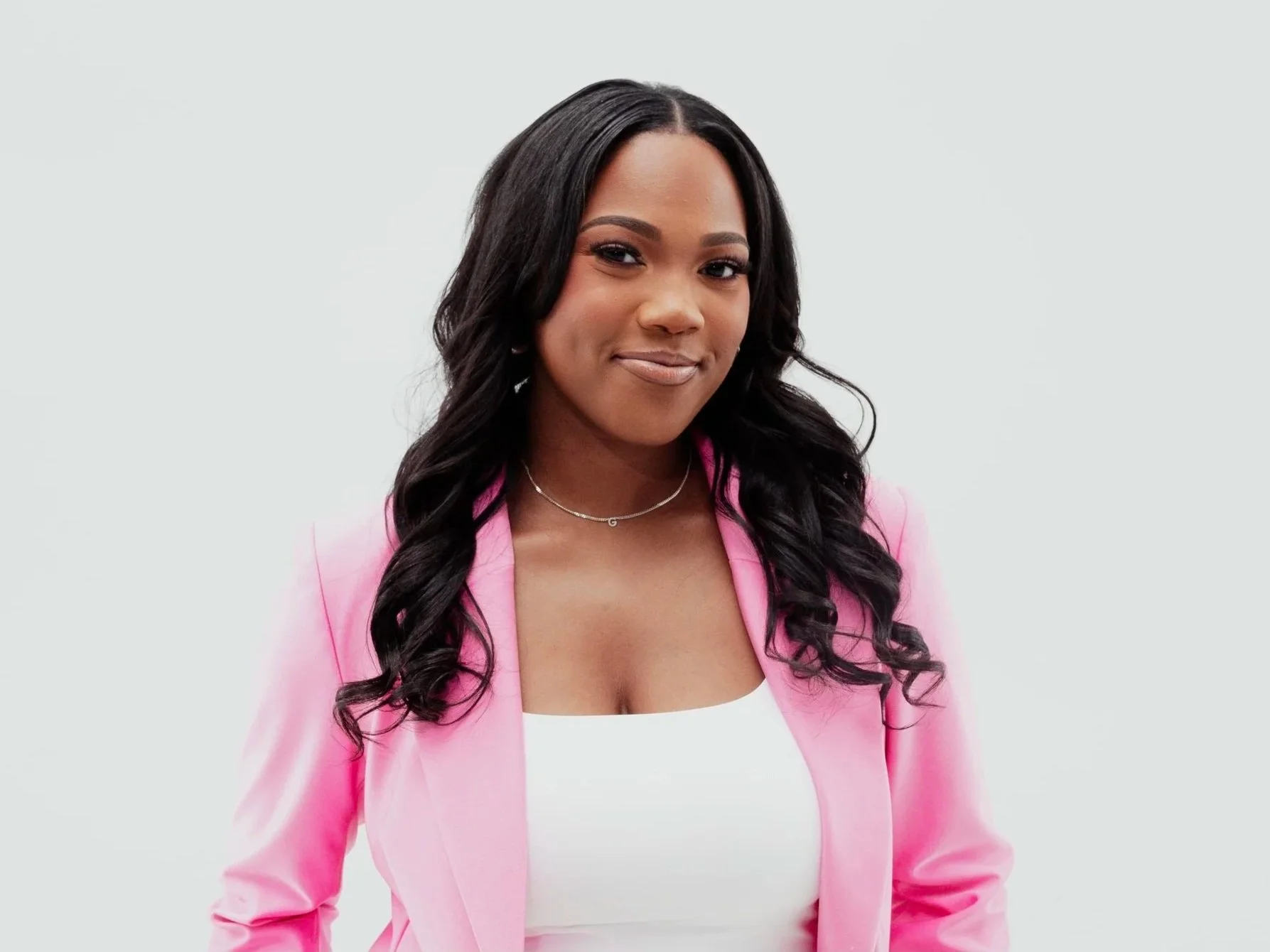
“She shifted human potential by proving that relentless self-advocacy is the only true path to personal sustainability™, giving people the power to own their brilliance without sacrificing their peace.”
January 2023. A rehearsal hall, somewhere inside Ford Motor Company's sprawling corporate ecosystem.
Geralyn Gaines is standing in front of a room configured for more than 200 dealers. It is her first rehearsal for what will become sixteen events that year. She has spent years inside Ford's Global Customer Experience organization convinced she has found her place — a dream job by any reasonable measure. But something shifts in this moment. Not gradually. All at once. Divine timing, she calls it, meeting her true passion: speaking.
She did not quit the room. She claimed it.
Geralyn Gaines is the founder and CEO of Keeping It G®, a Detroit-based speaking practice she describes as a culturally fluent platform — one that weaves video media, keynote speaking, and coaching into a single instrument. She is becoming, as she names it herself, "a trusted media voice and talent retainer in Detroit," building a framework she calls personal sustainability™: the discipline of protecting your peace while fully owning your power.
That is not a tagline. It is a survival architecture — one she built because the existing institutional infrastructure did not build it for her.
Detroit is in the middle of a renaissance. The Startup Genome project has identified the city as a top emerging startup ecosystem, and the stakes of getting this moment right are enormous. Detroit Future City's analysis projects that fully closing the racial equity gap in the region's tech sector could inject $6.8 billion in new wages into the local economy over the next five years. That figure is not aspirational window dressing. It is a structural argument for who this city needs to protect.
And yet: the Economic Policy Institute documents that Black women earn a median $0.68 for every dollar paid to white men — a gap that translates to more than $20,500 in lost wages annually. Nationally, Black professionals represent just 7% of the tech workforce and receive approximately 1% of venture capital funding. Detroit's renaissance is being built, in no small part, by people the ecosystem has systematically underinvested in.
You cannot build a $6.8 billion economy on the backs of people running on empty. If the region's growth continues to rely on over-extracting the talent driving this moment without building infrastructure to sustain them, the momentum will stall. This is not a wellness argument. It is an economic one.
The barriers Gaines is building against are not abstract. They are specific, named, and cumulative.
There is the barrier of re-proving competence — the experience of arriving in a strategy meeting with data, metrics, and technical recommendations, only to have your baseline decisions cross-examined in ways your peers' intuitions never are. The credential is not questioned openly. It is just never quite enough.
There is the barrier of strategic isolation — the way the room shrinks as you ascend, the sudden loss of a peer network that looks like you, the absence of an institutional sponsor who knows the political architecture and is willing to share the map. This isolation does not announce itself. It arrives quietly, in the form of questions no one around you knows how to answer.
And there is the barrier of accountable isolation — the experience of being handed enormous public responsibility and visibility while being denied the foundational support, capital, and staff required to sustain the pace. High-level outcomes. Zero infrastructure to protect the person delivering them.
These are not character flaws. They are systemic load-bearing walls that must be named before they can be moved.
Gaines chose to build the blueprint instead of waiting for someone else to hand it over.
The decision did not arrive with a press release. It arrived in that Ford rehearsal hall in January 2023 — in the recognition that the stage she had been preparing for was not the one on her organizational chart. The platform she needed to build was her own.
The construction of Keeping It G® is underway and methodical. The operation runs on a core team of two — a Special Projects & Partnerships Manager aligning the framework with external partnerships, and a Creative Director shaping the brand's visual identity and premium messaging. The daily workflow runs through ClickUp for development sprint management and Apollo for outreach, with a custom client portal housing video assets and content planning. Gaines uses both Gemini and Claude extensively to pressure-test concepts, synthesize research, and sharpen the framework's core language.
The framework itself is being built from the ground up: translating qualitative interview data into actionable curriculum on self-advocacy and personal sustainability™. To accelerate production, Gaines has invested in a dedicated studio space — a content engine designed to turn the curriculum into broadcast-ready multimedia playbooks, equipping leaders with the precise language and boundary-setting strategies required to navigate high-stakes environments.
The launch is targeted for Q4 2026. The foundation is being poured now.
The receipts, at this stage, are structural rather than numerical — and that transparency matters.
Gaines is candid: user counts, revenue, and press features are currently at zero (self-reported). Keeping It G® is in active framework development, not yet at scale. What exists is: a named core team of two, an operational tech stack, a studio space under development, a curriculum grounded in verified public data, and a founder with sixteen Ford-scale keynote events on her ledger (self-reported) and a framework built to survive institutional pressure.
The framework draws its structural stakes from Detroit Future City's $6.8 billion wage-potential projection and Economic Policy Institute wage data — both independently verifiable sources. The mission is not a hypothesis. The infrastructure is being built to prove it.
When Keeping It G® wins — and the framework scales — what changes is not just Gaines's career trajectory.
What changes is the entry experience. The next Black woman walking into a high-stakes corporate or entrepreneurial environment will not spend her first three years decoding organizational politics alone. She will not lose cognitive bandwidth re-proving credentials that were never the real issue. She will not carry the full weight of accountable isolation without a map.
She will step in with multimedia playbooks, precise self-advocacy language, and boundary-setting strategies from day one. The blueprint that Gaines is building from experience — at personal cost, without institutional support — becomes the repeatable institutional standard. The survival knowledge that currently lives in individual women, siloed and hard-won, gets codified, shared, and protected.
This is how ecosystems actually sustain themselves: not by extracting more from the people driving them, but by building the infrastructure to keep those people in the room.
Detroit's $6.8 billion future depends on it. So does the woman who hasn't arrived yet.
