
She's Building the School Detroit's Young People Deserved All Along.
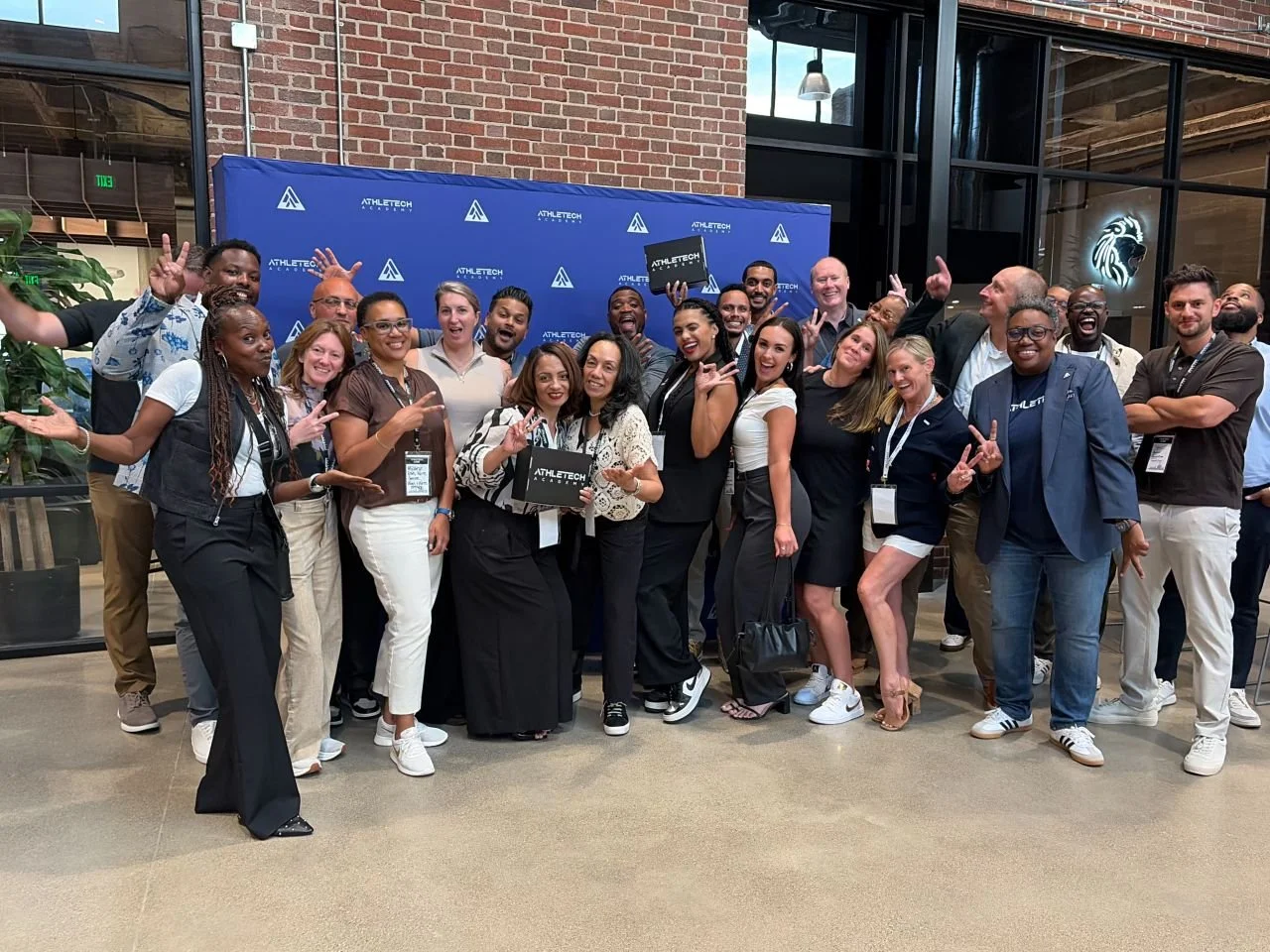
“Chloe Barnes-Henderson started Athletech Academy with a Canva deck in a Southfield salon. Now she’s building Detroit’s future-ready school for young people.”
In a Southfield salon in 2020, Chloe Barnes-Henderson opened her laptop and began turning a decade of notebooks into a school.
She was getting her hair braided. Her laptop was open. And the idea she had been carrying through classrooms, boardrooms, athletic departments, and entertainment offices was finally becoming something she could map, structure, and name. That afternoon, she built the first deck for what would become Athletech Academy. Not a program. Not a pilot. A school.
She wasn't running from something. She was running toward a question she had stopped being able to ignore: What if we built an educational model that started with what already inspired young people and used it to prepare them for the economy ahead?
That question, asked in a chair in Southfield, became an institution in the making. And Detroit is where she chose to build it.
Chloe Barnes-Henderson is a Detroit-based educator, entrepreneur, and the founder of Athletech Academy. She spent more than fifteen years working across education, sports, technology, and entertainment, building programs, developing people, contributing to institutions she believed in. By 2020, she had also learned something harder: that years of experience and capability don't always translate into being fully seen, valued, or positioned to build something she could own.
She describes her own arc plainly. She is becoming, she says, an architect of opportunity, building the pathways she wishes had existed for young people to turn what they love about sport into skills, experiences, and connections that prepare them for meaningful careers. Not a coach. Not a program director. An architect. The distinction is load bearing. Architects don't run the building. They design what endures after they're gone.
The city Chloe chose to build in is not short on ambition or on the weight of what's at stake for its young people.
Detroit Public Schools Community District reported that its chronic absenteeism rate declined from 66.1% in the 2022 to 2023 school year to 54.5% in 2024 to 2025. That is real, measurable progress, and it reflects genuine institutional effort. But it also means that more than half of DPSCD students were still missing significant instructional time during the most recent reported period, a fact that reframes the conversation about what "school" needs to feel like to earn young people's presence in the first place.
The workforce those same young people are preparing to enter is transforming underneath them. The World Economic Forum projects that 39 percent of workers' existing skill sets will be transformed or become outdated by 2030, while 63 percent of employers already identify skills gaps as a major barrier to business transformation. The skills growing most in demand, AI and data literacy, cybersecurity, creative thinking, adaptability, are not the skills most traditional secondary education systems were designed to teach.
Detroit is investing in closing that gap. Grow Detroit's Young Talent, the city's workforce program for residents ages 14 to 24, has provided more than 87,000 summer work experiences since 2015. In 2025 alone, more than 8,000 young Detroiters received summer employment opportunities across technology, entrepreneurship, public service, and other fields.
The opportunity infrastructure exists. The preparation infrastructure, the piece that helps a young person know what they're walking into, what skills they need, what careers are even available to them, is still catching up. That is the gap Athletech Academy is designed to close: using sport as the entry point, not the finish line, to connect young people ages 14 to 24 to the skills, exposure, networks, and confidence the economy ahead will actually require.
The friction wasn't subtle, and Chloe doesn't describe it that way.
She and her husband, Ashton, started with a vision and no significant startup capital, no building, no established donor base, no physical school for anyone to walk into and believe. In the philanthropic and funding ecosystem, grants more readily follow programs than the flexible operating capital required to build and sustain an organization. Raising money to run programs was often more achievable than raising the capital to build the infrastructure behind them.
There was also the reality of building in a city where neither of them was from. Detroit is a city where relationships, history, and community credibility are not assumed. They're earned. That required time, presence, humility, and consistency before the work could speak for itself.
And then there was the ceiling she could feel in certain rooms. Building a school takes millions of dollars. Chloe wasn't asking people to fund a small initiative; she was asking them to believe that a Black woman who had never built a school before, but who had spent her career developing the expertise that informed the vision, could build an institution. She learned to distinguish between people who found the idea inspiring and people who believed she could actually build it. That distinction showed up in rooms before she could name it.
She built it anyway, one question, one tool, one relationship, one decision at a time.
She started with a Canva deck and an LLM she used as a research and thinking partner, working through what it would take to build an independent school in Michigan: the 501(c)(3) application, the governance requirements, the accreditation process, the academic standards, the operational infrastructure. For roughly the first year, it was primarily her, her laptop, and the discipline to take something enormous and reduce it to the next question she could actually answer.
Technology, she is clear, was never the authority. It was the accelerant. Every working draft went in front of educators, nonprofit professionals, and subject matter experts who could challenge her assumptions and identify what she was missing. Her process became: use technology to close the first knowledge gap, build a working version, put it in front of someone who knows more, learn, revise, keep moving.
About a year in, Ashton stepped away from his full time role as Senior Deputy AD and COO at George Mason University to join the build, taking primary responsibility for fundraising, partnerships, and organizational development. That shift, from one person carrying the vision to two people building the institution, changed the pace and the possibility.
What she learned the hard way, she says, is that vision isn't enough on its own. You can see something clearly and still spend years helping other people see it. You can move fast on a deck, a plan, or a technology system. You cannot manufacture trust. You cannot rush community credibility. The technology helped her move faster. The research helped her get smarter. The people made the vision possible.
The proof is early, and it is real.
Athletech Academy received federal 501(c)(3) recognition in December 2025 (self reported). Since then, the organization has reached more than 200 young people, engaged nearly 25 industry professionals, and connected with more than 15 schools and organizations through workshops, simulations, summits, and career connected learning experiences (self reported).
The funding picture is beginning to take shape. In 2026, Athletech secured a $25,000 investment from MSU Federal Credit Union and a $150,000 unrestricted philanthropic commitment (self reported). During Athletech's first ever Giving Day, more than 60 individual donors contributed over $50,000 in 24 hours, an early signal that people weren't just interested in the idea, but willing to put resources behind it (self reported).
The programming is expanding geographically. In July 2026, Athletech launched Tallahassee DREAMS, a free day of career exploration, leadership development, and entrepreneurship for 50 high school student athletes in partnership with Visit Tallahassee Sports and local education, civic, and industry leaders (self reported). A Lansing DREAMS is in development with partners including the Lansing Sports Commission, the Michigan High School Athletic Association, and Lansing School District, with support from Senator Sarah Anthony and Recharged Pilates (self reported, partnerships in development).
In September 2026, Athletech Academy established its first dedicated office space at TechTown Detroit (self reported). The organization is formalizing partnerships with the Detroit Pistons and Living Arts Detroit (self reported, described as in development). The Board of Directors expanded from 7 to 12 members in 2026, adding expertise and networks across Michigan, New York, and California (self reported).
Chloe was also selected as a 2026 Change Collective Fellow in Detroit, through which she developed the AI Mobile Learning Lab, an initiative designed to bring AI literacy, digital skills, and career exposure directly into Detroit neighborhoods as a civic action project (self reported).
The school itself is still in development. These programs are the testing ground, not the finished institution. Athletech's current plan is to begin admissions in Fall 2027 and welcome its first full cohort in Fall 2028. The receipts here belong to the organization in formation, which is exactly what they are, and exactly what they prove.
What Chloe is building is bigger than a school, and she knows it.
Detroit's young people are not disengaged because they lack ambition. They are navigating systems that too often extracted value from their interests, their athleticism, their attention, their cultural fluency, without returning much in the form of preparation. Athletech's model starts with what young people already care about and treats it as a gateway, not a distraction: sport as the entry point into data analytics, sneakers as the entry point into entrepreneurship and design, sports media as the entry point into technology, marketing, and storytelling.
If Athletech wins, the next person to build something like this in Detroit doesn't have to start from scratch. They inherit a proof point, a pathway, an institutional model that says young people don't need to abandon what inspires them to earn a place in the economy ahead. They need someone to connect what they already love to where the economy is actually going.
Athletech isn't just preparing young people to work in sports. It is building the case, in curriculum, in outcomes, in graduates, that belonging creates builders, and builders create mobility. And that argument, if proven in Detroit, does not stay in Detroit.
If this work resonates with you, connect Athletech Academy to one Detroit school, community organization, or corporate partner that can help bring their programming to more young people across the city.
The sports industry alone is projected to exceed $630 billion globally by 2030, and most young people in Detroit have never been shown the door that leads inside it. Chloe Barnes-Henderson is building that door. The question is who helps her put it where young people can actually reach it.
Learn more at athletechacademy.org. Follow Athletech Academy on LinkedIn and Instagram. Connect with Chloe directly at linkedin.com/in/chloebarnes03.
For partnership, programming, or organizational inquiries: info@athletechacademy.org
